安娜情欲史
书名:飓风营救|作者:笑无语|本书类别:古言|更新时间:05:03:07|字数:3896字
A | Representatives from China and the United States participated in a dialogue on Tuesday in Beijing, where they called for joint efforts to translate the consensus reached by the two countries' heads of state into concrete action and tangible results, while also suggesting expansion of practical cooperation across a number of fields. They highlighted mutual respect, peaceful coexistence and win-win cooperation as key to keeping bilateral ties on a stable track, while stressing the need for the two countries to jointly address global challenges and bring greater stability to the world. The gathering was the third China-U.S. Track 1.5 Dialogue, jointly launched in October 2023 by the International Department of the Communist Party of China Central Committee and the Asia Society as a platform connecting representatives from politics, strategy, business, academics, civil society and youth in both countries. In May, President Xi Jinping and U.S. President Donald Trump agreed to make the building of a constructive China-U.S. relationship of strategic stability the new positioning for bilateral ties, providing strategic guidance for the relationship over the next three years and beyond. John L. Thornton, cochair of the Asia Society Board of Trustees, said Xi and Trump are both historic figures who know each other well and have a good personal relationship — a combination he described as highly unusual. "I think it's very important that the benefit of that is concrete and seen by the people, both in the United States and in China," Thornton said. He added that the key test was what the new positioning would mean in practice and whether it could produce results. "There are a lot of possibilities for progress, and I'm optimistic that there will be progress," he said. Christopher Nixon Cox, a member of the Richard Nixon Foundation's board of directors and a grandson of former U.S. president Richard Nixon, called the leader-to-leader relationship "the most important thing", saying it gave him confidence about the future of bilateral ties. While acknowledging that China and the U.S. would continue to have differences, Cox said they should seek common ground in the fields of artificial intelligence, agriculture, food security and economic affairs to help build a stable and prosperous world. "There are many things with AI that we can agree on," he said, citing the need to prevent it from harming children. Cox also invoked Nixon's historic visit to China in 1972 as an example of the political courage required on both sides. "There are many lessons from my grandfather's trip to China," he said. "One is that nothing happens without courage." Liu Haixing, minister of the International Department of the CPC Central Committee, said that a stable China-U.S. relationship was in itself the greatest contribution to world peace and development. Liu called for expanding common interests, rejecting zero-sum thinking, managing differences through clear policy signals, and upholding the bottom line of no conflict and no confrontation. Competition between major countries is normal, he said, but that should not define the entire relationship, emphasizing that it should be a healthy and positive race rather than a life-or-death gladiatorial contest. A zero-sum approach, he added, would distort market rules, disrupt global industrial cooperation and undermine market confidence. Craig Allen, former president of the U.S.-China Business Council and a nonresident senior fellow at the Asia Society Policy Institute's Center for China Analysis, said that both governments needed to follow the common framework agreed upon by the two leaders. He said maintaining an open trade and investment environment was critical to achieving the two leaders' goals. Warning that decoupling would "make us both poorer" and that "neither side can afford to decouple", Allen described the Chinese and U.S. economies as "the two engines of growth in the global economy", saying robust growth in both was essential to global stability. Sean Stein, president of the U.S.-China Business Council, said that China's importance to U.S. companies extended well beyond the size of its market. "Think of China not as a market but as a platform. That's what's important," Stein said. China's technological ecosystem, the partnerships companies form and the experience they gain there help shape products and business processes used in other markets, he added. The council's 2026 member survey found that 95 percent of respondents viewed their China operations as at least somewhat important to staying globally competitive. "China is a really important part of global competitiveness for American companies," Stein said. 
 。
。
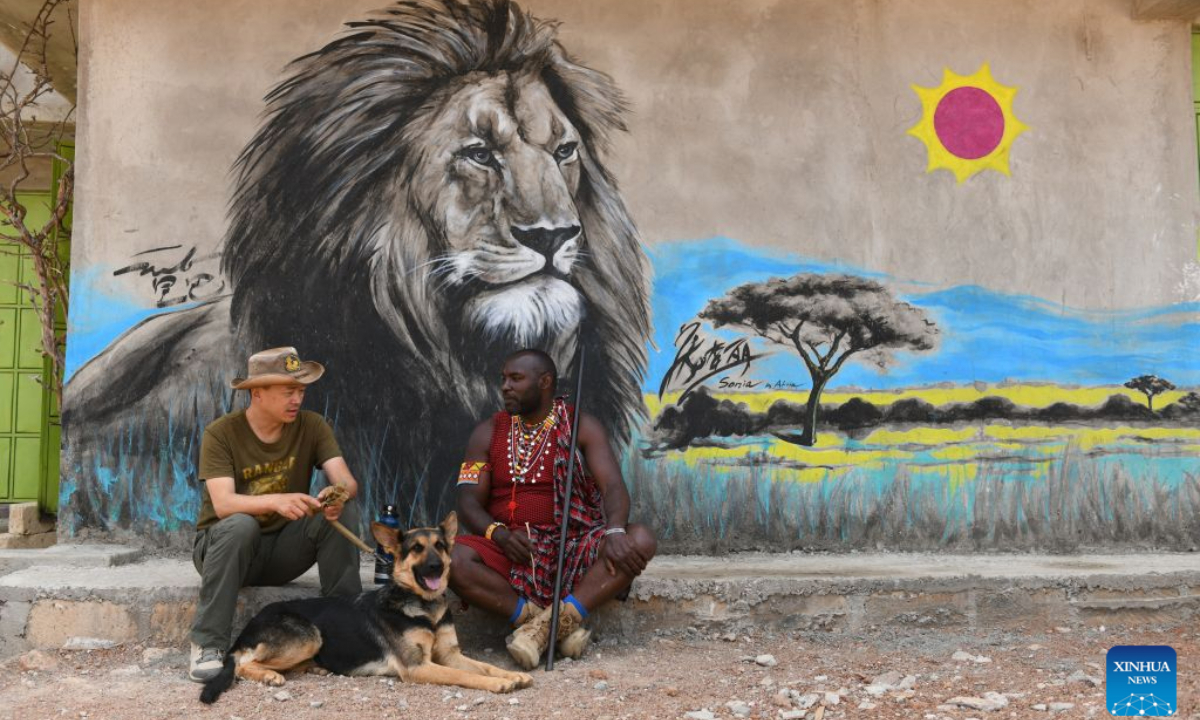
Among them is Chinese conservationist Zhuo Qiang, nicknamed "Simba," the Swahili word for lion. For him, this early-morning routine is driven by a broader mission to achieve human-wildlife coexistence.
In 2010, Zhuo left his job in China at the age of 37 and embarked on a less-traveled path: pursuing wildlife conservation in Kenya.
Without professional training in wildlife conservation, he found himself in a territory then dominated by Western organizations and local practitioners.
But Zhuo decided to stay. "I wanted to prove that Chinese people could also do wildlife conservation," he said.
Initially, Zhuo saw conservation largely through the lens of wildlife science: working in the field, studying animals and collecting data.
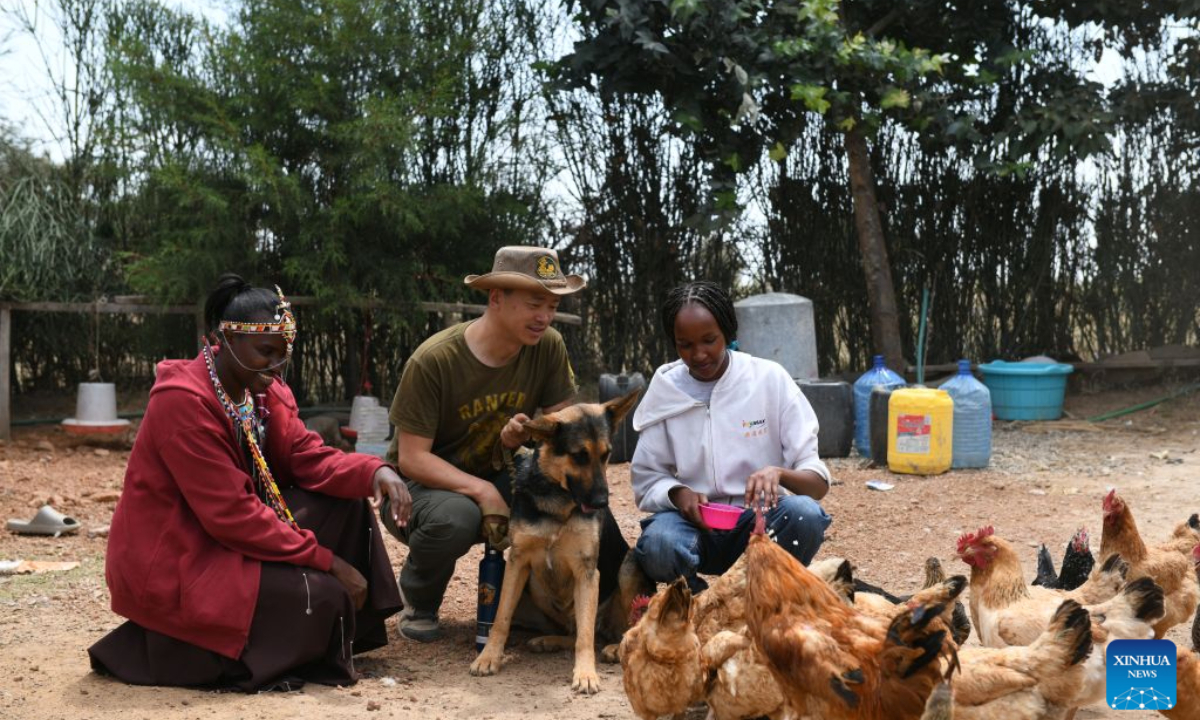
Living and working with Maasai communities changed that perspective. "The fate of wildlife was closely tied to the people sharing the same land," he said.
In the Maasai Mara ecosystem, livestock grazing is deeply connected to the livelihoods of pastoral communities. "If local people are asked to stop grazing but are given no alternative source of income, conservation cannot be sustainable," Zhuo said.
That principle laid the foundation for his work with the local community in establishing the Ol Kinyei Conservancy.
The area had suffered from prolonged overgrazing, with plants and the land itself deteriorating. Under the conservation model, local grazing land was leased and gradually restored, allowing vegetation to recover and creating a more suitable habitat for wildlife, said Zhuo.
Meanwhile, households participating in the scheme receive land-rental income and have access to jobs such as wildlife rangers and tourism workers. Their average annual income has increased from around 500 U.S. dollars to about 3,700 dollars, according to Zhuo.
Some residents from surrounding communities also learned from the experience and brought the approach back to their own grazing areas.
Nowadays, 26 private conservancies have been established around the Maasai Mara National Reserve, covering about 1,600 square km, according to Zhuo.
He believes the network of community conservancies provides additional safe space for wildlife to move and survive, extending conservation efforts beyond the boundaries of a single national reserve and into surrounding communities.
Simon Msago, a Maasai community leader in Ngoswani, said Zhuo's work encouraged more residents to take an active role in conservation.
In the past, many residents saw few direct benefits from wildlife conservation and had limited awareness of its importance. Today, community members are increasingly willing to work as rangers and protect wildlife, creating an effective layer of protection around the conservancies, Msago said.
"Human-wildlife conflict cannot be solved simply through restrictions and prohibitions. The key is to create alternative sources of income so that residents can gain tangible benefits from conservation," Zhuo said.
"That is what makes community-based conservation sustainable -- allowing local people to become part of wildlife conservation rather than bystanders with no stake in it."
While continuing his work in the Maasai Mara, Zhuo has also sought to strengthen exchanges between China and Africa in wildlife conservation.
In recent years, he has visited more than 30 nature reserves and national parks in China, sharing his experiences of community-based conservation in Africa with Chinese counterparts.
"Conservation practices in China and Africa each have their own characteristics, and there is much that the two sides can learn from each other," he added.
。

B |


